Unified POS System
Clover POS system was built as independently developed apps, creating fragmented experiences, inconsistent design, and multi-version code. This increased technical debt, raised development costs, and made testing new features more difficult.
I developed a strategy to address these challenges by introducing shared workflows, codebase consolidation, and design system across POS devices and mobile apps. I partnered with cross-functional leadership to drive alignment and secure investment in a company-wide transformation of how experiences were designed and built.
Impacts
75%
Reduction in time from implementation to release
Forecasted cost saving in implementation
$250K
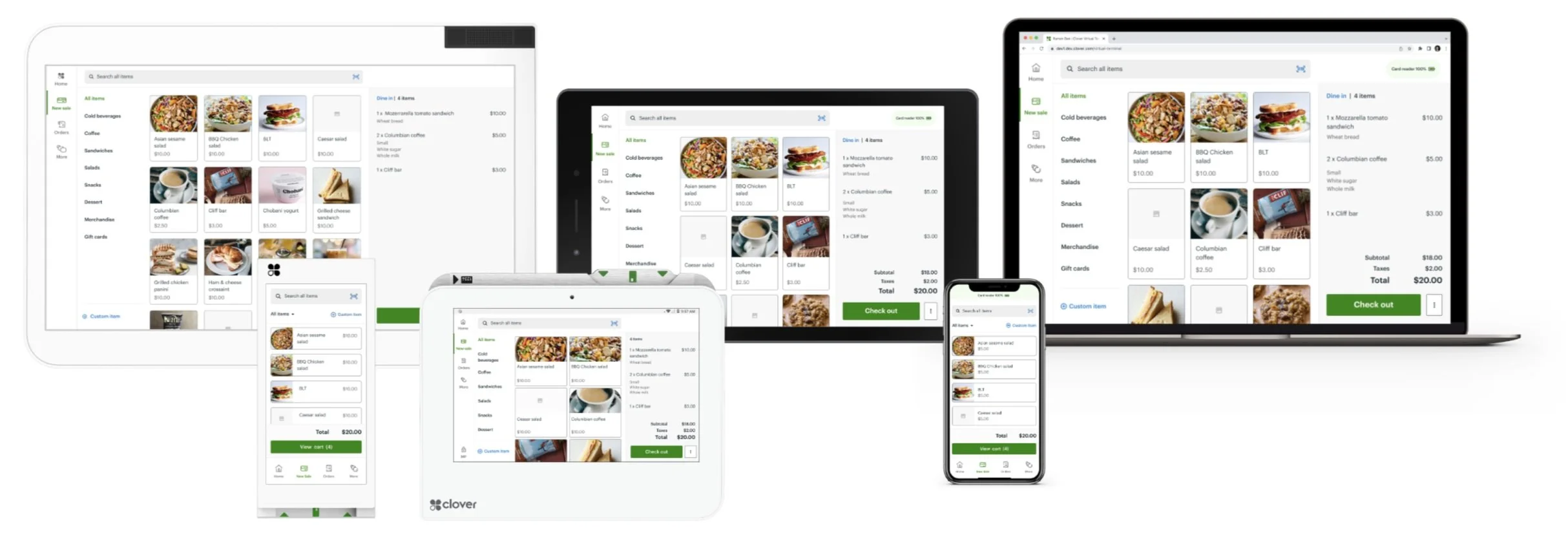
What we wanted to accomplish
Reduced development and maintenance costs.
One reliable code and experience that worked on any form factors.
Ensured consistent and familiar behaviors wherever merchants used Clover ecosystem.
Developed clean and scalable technical architecture to make testing and updates easier.

What I did
Advocated combining experiences, code, and design by creating and presenting a complete concept.
Led and guided designers in developing this idea into concrete details.
Built a strong network of allies in company leadership and engineering team who had the skill set to turn the concept into prototype, and then into a real product.
Worked with the design system team to extend our web design system into one for Clover POS devices.

Using framework to build real products
Compact, kiosks, phone and tablet app had consistent Clover experience that leverage the same design components.
Clover Compact was the first Clover POS device that met the goals of Unified POS Framework. It was built with consolidated code base, using design components, and focuses on primary workflows.
Impacts
Engineering team consolidated 5 code base to one based on this framework that cut development and maintenance time by 75% and reduced engineering cost by upward of quarter of a million USD annually.